


Grounding Pillowcase with 10% Silver Fiber – Conductive Earthing Pillow Cover, Queen 20" x 30", Gray

Grounding is a connection, not a treatment
Here is what a grounding sheet physically is. Conductive silver fibre is woven through cotton. A cord runs from the fabric to the round third pin of your wall outlet. That pin is bonded to earth somewhere outside your building. Lie on the sheet and your body sits at the same electrical potential as the ground outside. That is the whole mechanism, and it is the part nobody disputes.
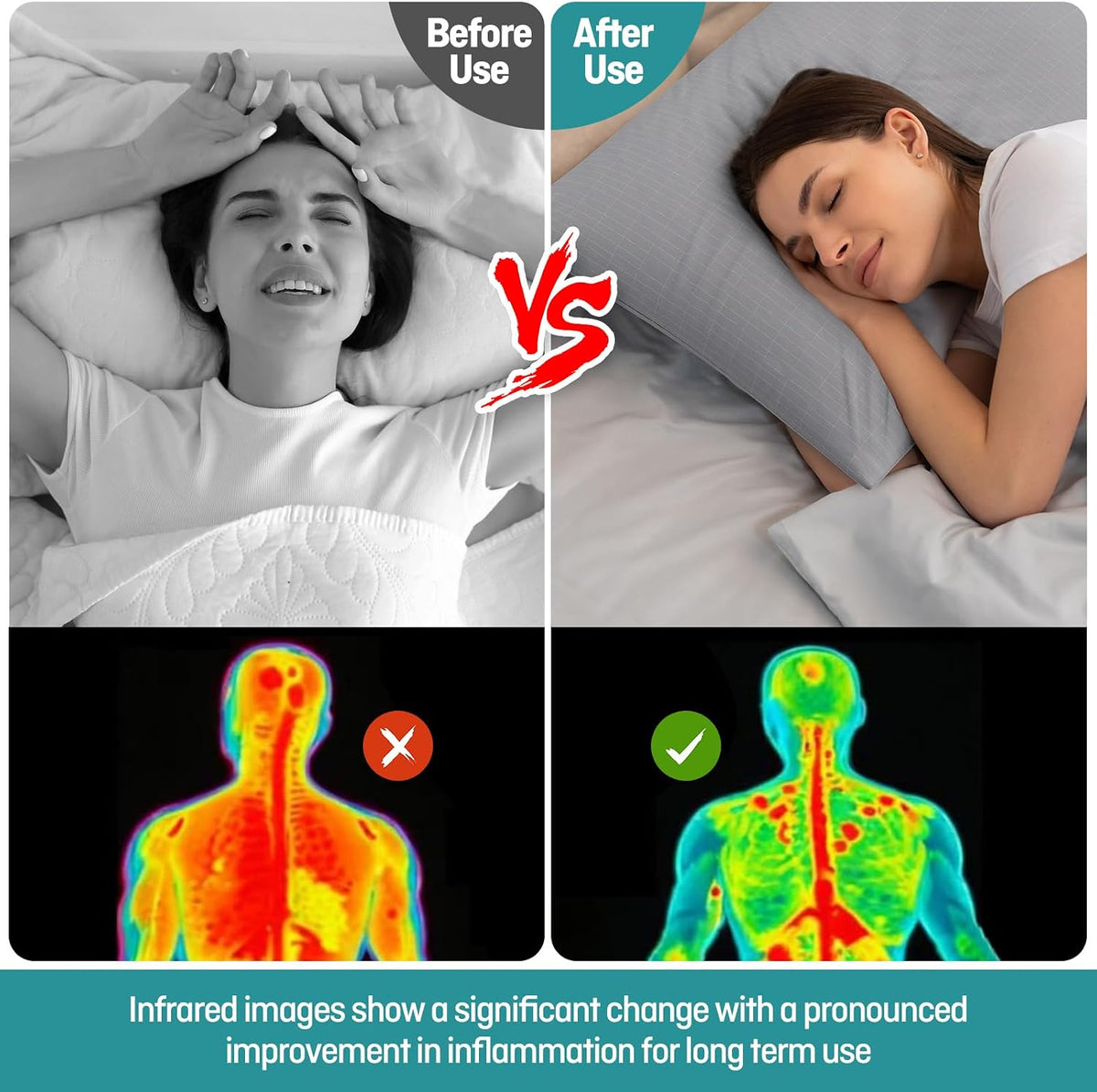
What happens next is where the honesty has to start. The research on grounding is early, the studies are small, and the results are mixed. Plenty of people who sleep on these say they sleep better. That is worth something, and it is also not a clinical finding. We are not going to put a number on it or tell you what it will do for your body, because we don't know and neither does anyone selling it to you.
So we sell the hardware and describe it accurately. Which fibre, which port, how long the cord is, how to wash it, how to check it is connected. If you want to try grounding, you should be able to buy a well-made sheet from someone who isn't making promises about your health.
Against a grounding sheet with no spec sheet
Most grounding products are sold on feeling rather than facts. These are the facts we think you are owed before you spend anything.
| Zaremora | The typical listing | |
|---|---|---|
Says which fibre carries the connection |
||
Explains that it uses the ground pin, not live current |
||
Works with a standard grounded US outlet |
||
Cord length stated, replacement cord sold separately |
||
Washing instructions that won't kill the conductivity |
||
Makes no claim about your health |
Why we stock grounding at all
Zaremora exists to sell things made from what grows back, described accurately. Grounding sits slightly oddly in that — it is not a material story, it is an electrical one. We stock it because the people buying our bamboo sheets kept asking for it, and because the category is full of sellers who will tell you anything.
Our position is simple. The connection is real and measurable. The benefit is unproven. You are an adult and you can decide what to do with those two facts. What you shouldn't have to do is guess what's in the fabric or whether plugging it in is safe.
Questions
How does it actually connect to the earth?
A cord runs from a snap on the fabric to a plug that goes in your wall outlet. Inside the plug, only the round third pin is used — the ground pin. That pin connects to the grounding system of your building, which connects to a rod driven into the soil outside. No current from the outlet's live pins reaches the fabric or you.
Is it safe to plug this into a wall socket?
The ground pin is the safety pin. It exists to give stray current a path away from you, and in normal operation nothing flows through it. The plug on these products does not make contact with the live or neutral pins at all. If you are ever unsure about the wiring in an older building, an electrician can test an outlet in a couple of minutes.
How do I know it's working?
A socket tester from any hardware shop will tell you whether the outlet itself is properly grounded, which is the part most likely to be wrong. For the fabric, a multimeter set to continuity will show a connection between the snap and the far corner of the sheet. If you want to check it over time, do that once when it arrives and again after a few washes.
What if my outlet isn't grounded?
Older buildings often have two-pin outlets with no ground, and some three-pin outlets are wired without one. In that case the sheet has nothing to connect to and won't do anything. A grounding rod kit connected to soil outside is the usual workaround, or an electrician can ground the outlet properly.
Does it have to touch bare skin?
Contact is what completes the circuit, so yes — skin on fabric. Through pyjamas and a top sheet there is no path. In practice most people cover the sheet with a thin fitted sheet and sleep with arms, feet or face in contact, which is enough.
Can I wash it?
Cold water, gentle cycle, no bleach and no fabric softener. Softener is the real enemy: it leaves a coating on the fibres that insulates the silver and quietly stops the thing working while it still looks fine. Line dry rather than tumble dry. Conductivity does fade with washing over years, which is why we sell replacement cords and say so.
Is the cord included?
Each product page states what comes in the box. The 15ft cord is also sold on its own, because cords get lost, chewed and trodden on long before a sheet wears out, and replacing a $20 cable is better than replacing a $99 sheet.
What does grounding actually do?
We don't know, and we're not going to pretend otherwise. The physical connection is real. The claims made about sleep, inflammation and recovery come from a small body of early research that has not settled. Many customers report sleeping better. Treat that as what it is — people's experience, not a medical result — and don't buy this instead of seeing a doctor about something that's bothering you.