


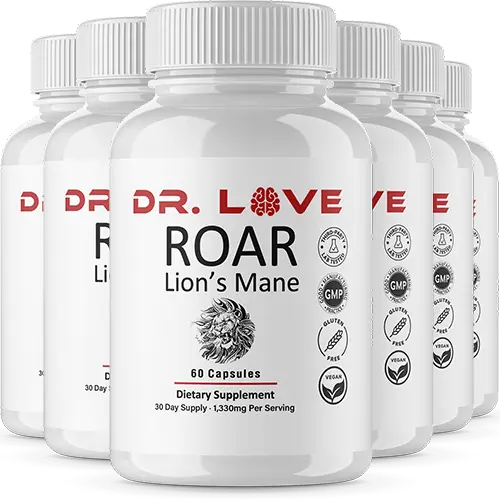
ROAR Lion's Mane
Required disclaimer
These statements have not been evaluated by the Food and Drug Administration. This product is not intended to diagnose, treat, cure, or prevent any disease.
That paragraph is on this page because the law requires it on any dietary supplement sold with a claim about the body. We would rather you read it than scroll past it in six-point grey type at the bottom, which is where most of this industry puts it.
If something is wrong with you, see a doctor. A supplement is not a substitute for that, and anyone implying otherwise is selling you something more dangerous than a capsule.

The supplement aisle runs on a legal loophole
Dietary supplements are not approved by the FDA before they go on sale. That is not a conspiracy theory, it is how the 1994 DSHEA law works: a manufacturer may sell a supplement without proving it does anything, as long as it does not claim to treat a disease. The agency steps in afterwards, if something goes wrong.
Which is why the writing on these products is so strange. A label cannot say "cures anxiety" — that is a drug claim and it is illegal. So it says "supports a calm mood" instead, which means nothing in particular and is therefore permitted. An entire dialect has grown up around the gap: supports, promotes, helps maintain, optimises.
We stock supplements because people want them and because some of these ingredients have real research behind them. What we will not do is write in that dialect. Each page says what is in the bottle, how much, how it is taken, and who made it. Where a supplier's own description makes a claim, that is theirs and it is labelled as such — and the disclaimer above applies to all of it.
Against a proprietary-blend tub
Most of what separates a reputable supplement from a bad one is on the label, in the parts people skip.
| Zaremora | The proprietary blend | |
|---|---|---|
Every ingredient listed with its amount |
||
No "proprietary blend" hiding the doses |
||
Serving size and daily count stated |
||
Manufacturer and country named |
||
FDA disclaimer on the page, not buried |
||
No claim to treat or cure anything |
Why a bamboo shop sells capsules
Zaremora has one question behind everything on it: what is this actually made of? For a sheet that means naming the fibre. For a capsule it means naming the compound and the dose, which is the same question asked of a harder category.
Supplements are the worst-labelled consumer goods in America and the easiest place to be quietly misled. A shop that lists the ingredients, states the amounts and refuses to promise an outcome is doing the bare minimum — and the bare minimum is rarer here than it should be.
Questions
Are these FDA approved?
No, and neither is any other dietary supplement on sale anywhere. The FDA does not approve supplements before they go to market — it regulates labelling and can act after the fact. Any product claiming to be FDA-approved is either a drug or lying.
What does the disclaimer actually mean?
That nobody has tested this particular product against a disease and shown it works, and that it is not sold as treatment. It is not a formality we resent — it is the single most honest sentence on most supplement packaging.
Can I take this with my medication?
Ask a pharmacist or your doctor, and bring the bottle. Supplements genuinely interact with prescription drugs — St John's wort with antidepressants and the pill, vitamin K with warfarin, high-dose magnesium with certain antibiotics. We are not qualified to clear a combination for you and we are not going to pretend we are.
Are these safe during pregnancy or breastfeeding?
Ask your doctor or midwife before starting anything, including things that sound harmless. Herbal ingredients are not automatically gentle, and the research on most of them in pregnancy is thin to nonexistent.
Can I give these to my children?
Not unless the product is specifically formulated and dosed for children, and not without asking a paediatrician. Adult doses are not scaled-down safe, and some ingredients are not appropriate at any dose for a child.
How long until I notice anything?
We are not going to put a number on that, because it would be invented. People's experiences vary enormously and some people notice nothing at all. If a seller tells you "results in 7 days", they are making it up.
Is "organic" or "natural" a guarantee of anything?
Organic is a certified farming standard and means something specific about how an ingredient was grown. Natural is not regulated in any meaningful way and means close to nothing. Both appear on these pages where the supplier uses them; only one of them is a fact.
What if it doesn't work for me?
Get in touch and we'll sort it out. We would rather refund you than have you keep taking something that is doing nothing for you.